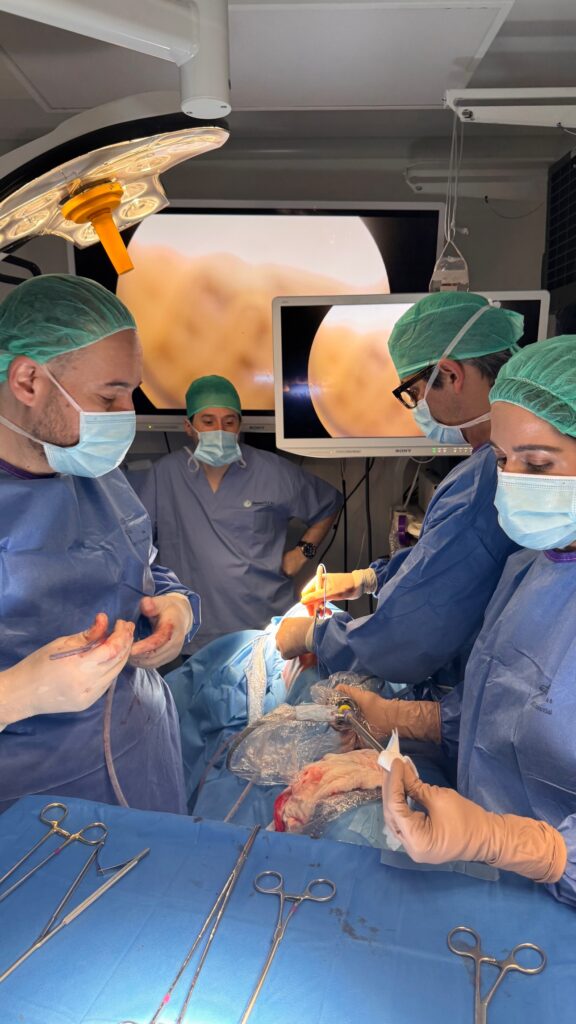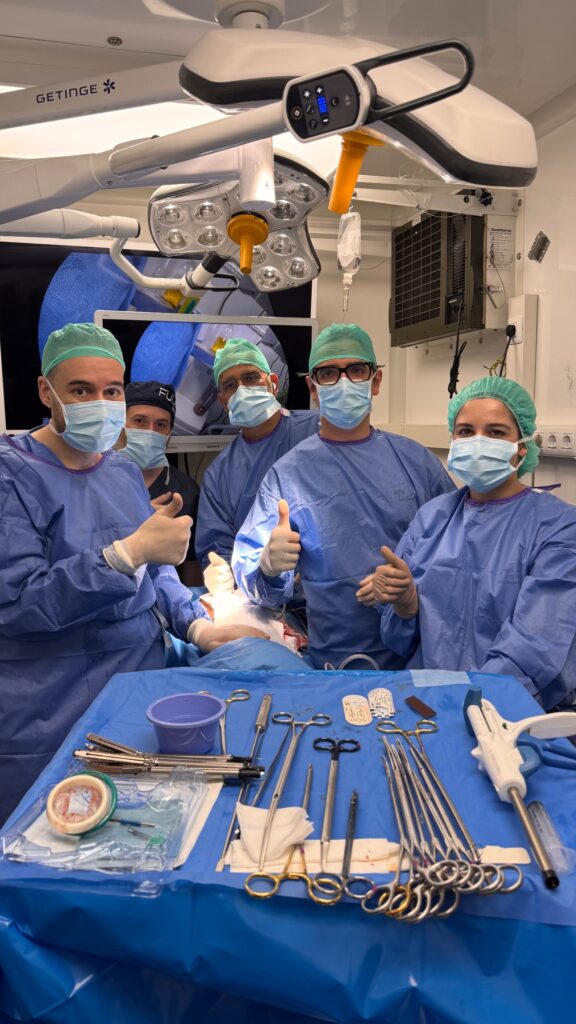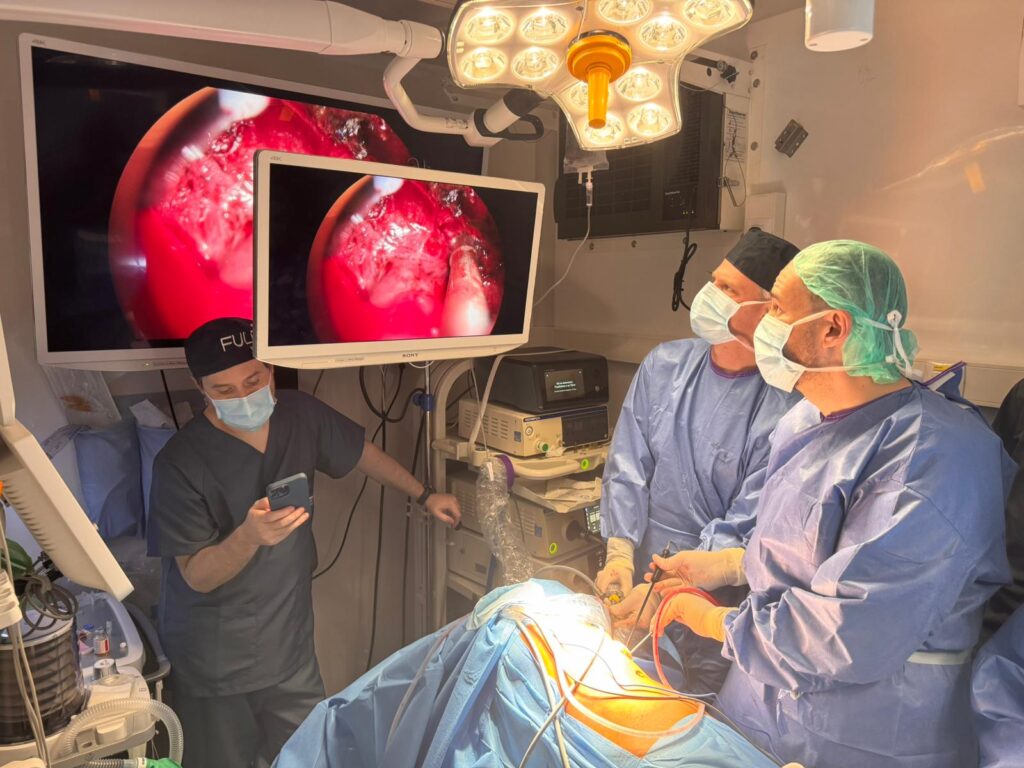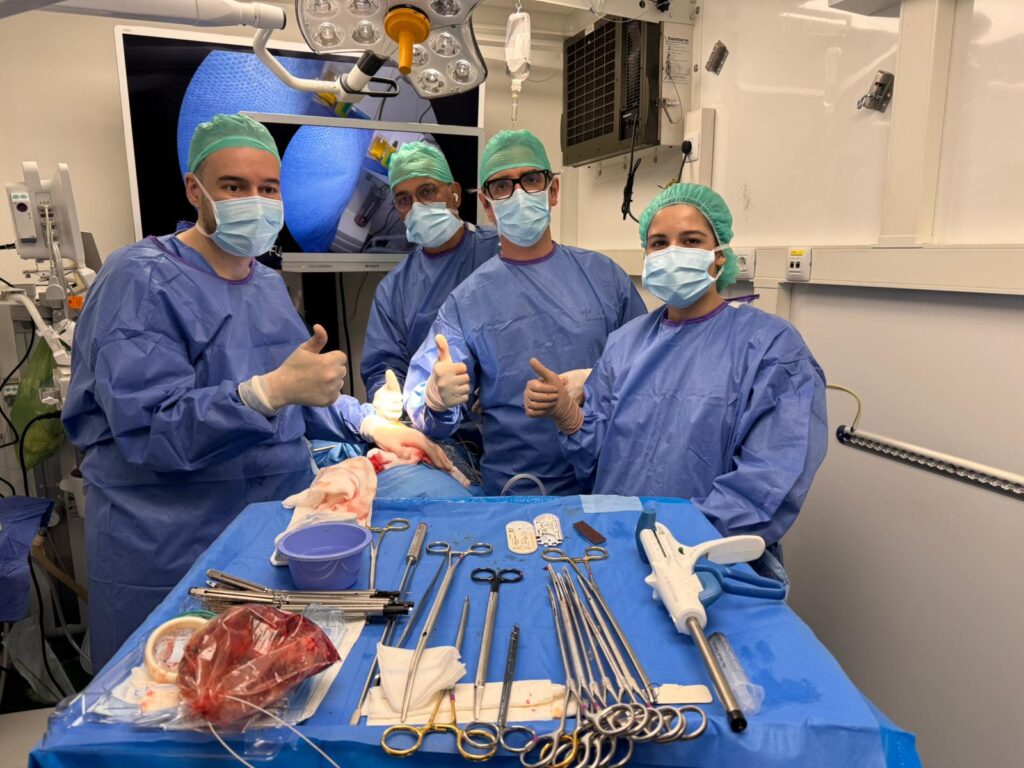
Seven patients. Four days. A two-to-three centimeter incision. And a country—Liberia—where none of these procedures had ever been performed before. That is the legacy of the mission led by the Diego González Rivas Foundation in Monrovia, as the team returns to Spain tonight.
The mobile unit, ready for the impossible
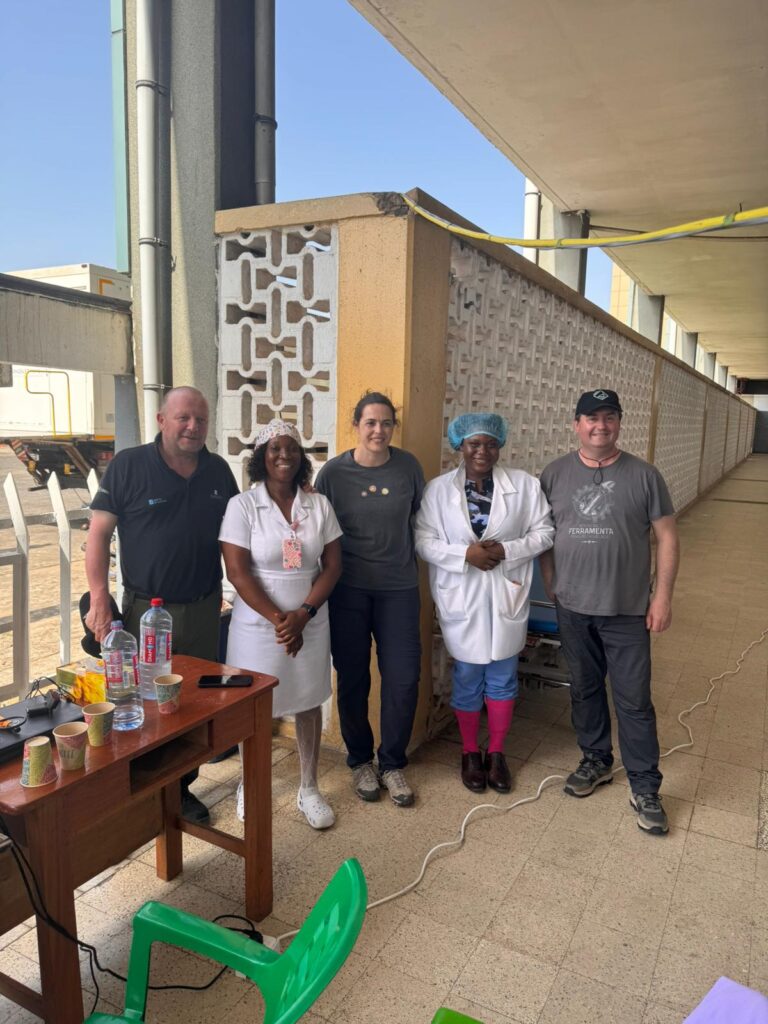
Before the medical team arrived, others had already spent days in Monrovia. Víctor, Alberto and Leticia—technicians from CIFP As Mercedes in Lugo—worked tirelessly to prepare the mobile surgical unit under extreme heat and with the inevitable challenges that accompany every mission on African soil. Among them, a customs issue that Professor Coleman, Head of Surgery at the John F. Kennedy Hospital in Monrovia, helped resolve with patience and determination.
When Dr. Diego González Rivas and the rest of the team arrived at the hospital—at five in the morning, exhausted from the journey—the unit was ready.
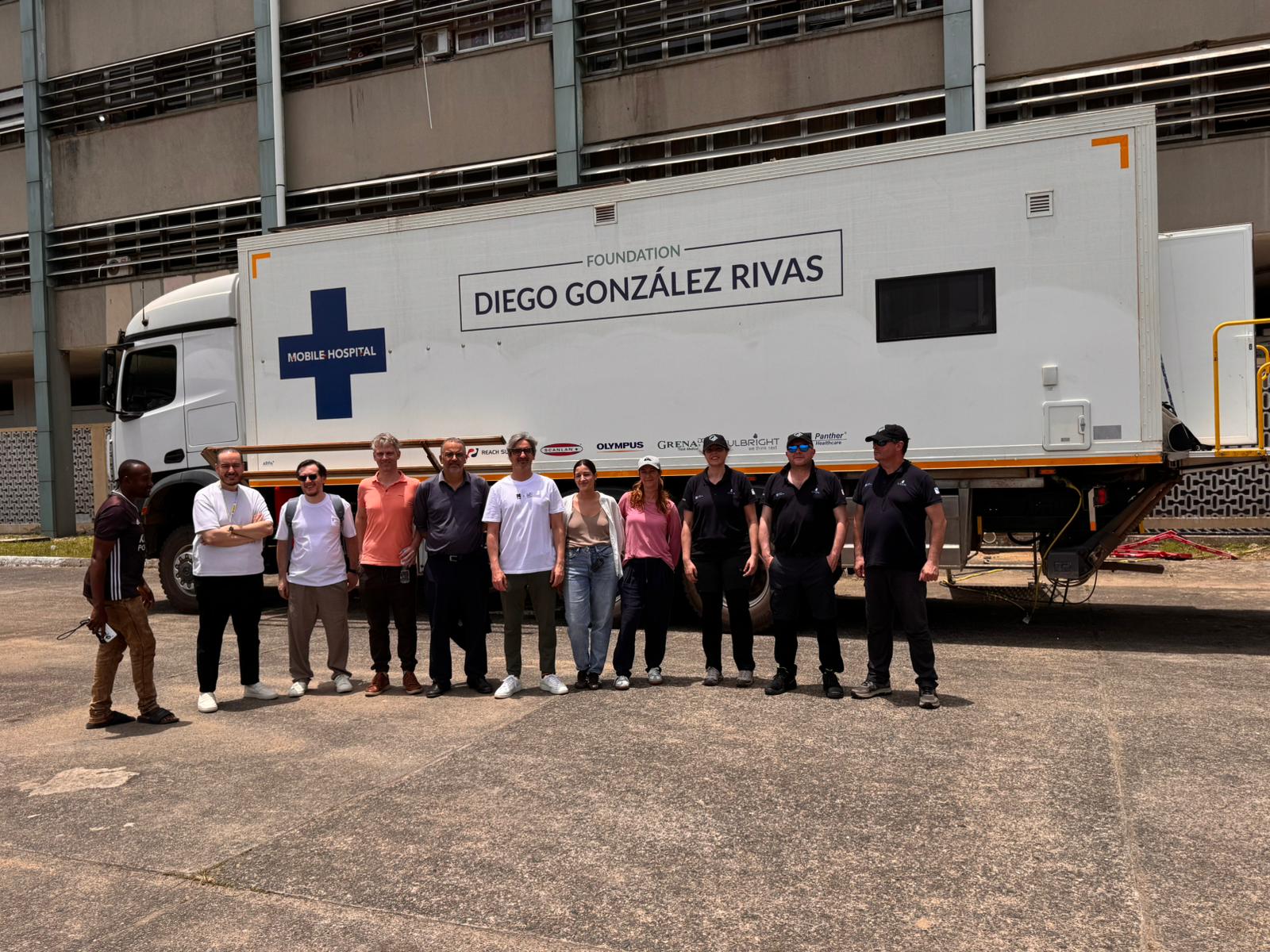
There is only one mobile surgical unit in the world capable of performing minimally invasive thoracic surgery. It is equipped with satellite and 5G connectivity, centrally controlled medical gases, a sterilization area, a medication refrigerator, high-definition 4K monitors, a state-of-the-art operating table, and a modern ventilator. A fully equipped operating room on wheels, deployed thousands of kilometers from Spain, on the shores of the African Atlantic.
The team
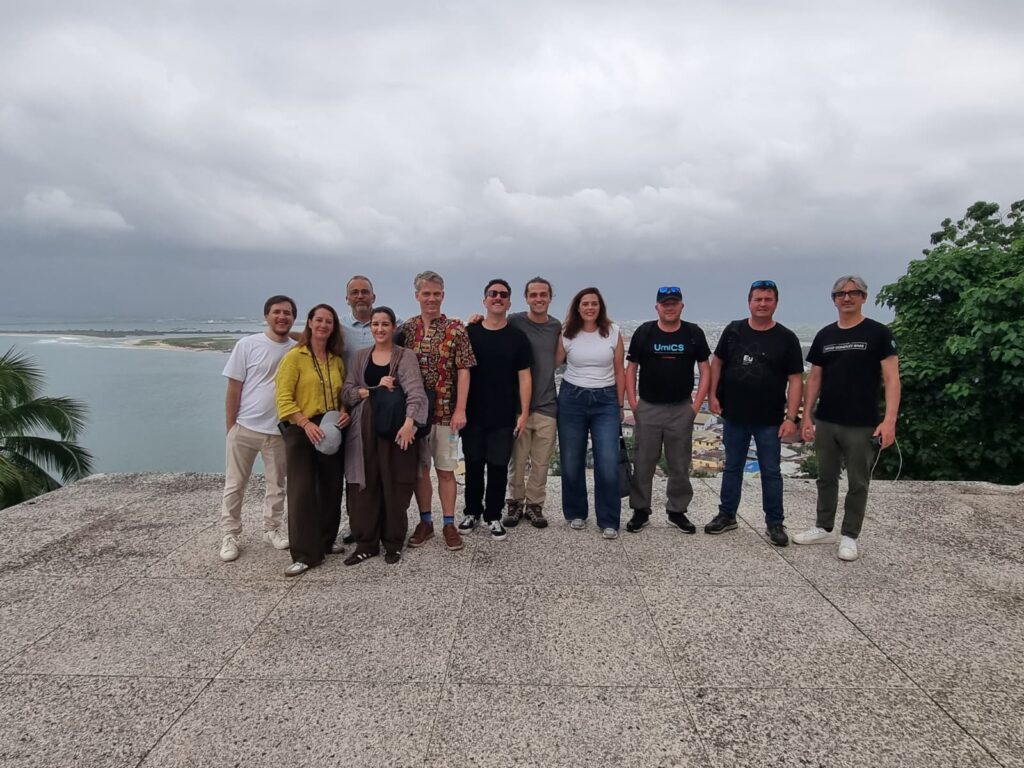
Alongside Dr. Diego González Rivas—pioneer of the Uniportal VATS technique and driving force behind this mission—operated Tom Gresnigt, a Dutch thoracic surgeon experiencing his first mission as a specialist, and Usam Unami, a Libyan thoracic surgeon trained in Germany. Anesthesia was led by Radu Podaru, with local anesthesia support provided by Bovia, who traveled from Casablanca. The nursing team consisted of Lorena and Silvia, also on their first mission with the Foundation.
On the ground, the three engineers from CIFP As Mercedes in Lugo—Víctor, Alberto and Leticia—kept the unit operational throughout each day. Without them, none of the surgeries would have been possible.
Day by day: four days that will go down in history
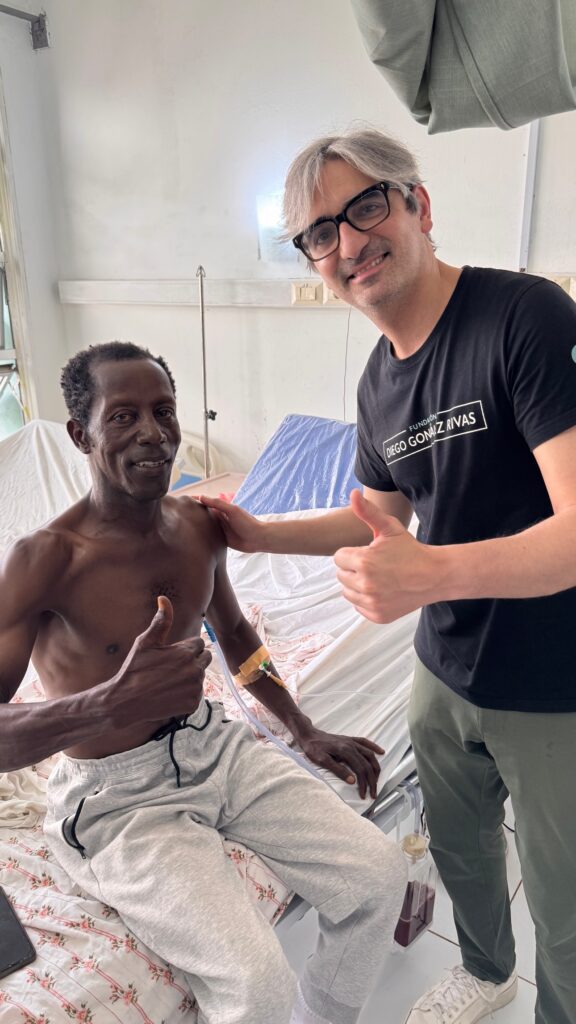
Day one. Team presentation and unit inspection. The first patient—a man with a destroyed lung—underwent a right Uniportal VATS pneumonectomy: the first minimally invasive thoracic surgery in the history of Liberia—a milestone that will remain in the country’s medical history. The procedure was successfully completed.
Day two. The day began with a training session for local surgeons, attended by the country’s Minister of Health. Then, surgery. Another minimally invasive pneumonectomy was performed, followed by additional procedures. Dr. Diego González Rivas and Tom Gresnigt provided training to local doctors, in line with the Foundation’s commitment to knowledge transfer. As often happens in these missions, there was also room for everyday humanity: the doctor’s name was transformed into “Diego González Rival” during the official presentation, joining the long list of variations it has accumulated in more than 140 countries.
Day three. Africa, as always, had a surprise in store. During the night, someone entered the mobile unit and damaged a key electrical box essential for its operation. By morning, the operating room could not function. What could have ended the mission became instead another demonstration of the engineers’ resilience: Leticia, Víctor and Alberto diagnosed the issue, dismantled the affected components, and restored the system within hours. Nothing is impossible. Three patients were operated on that day.
Final day. The most complex surgery of the mission: a left upper lobectomy for aspergilloma, one of the most demanding procedures in the specialty. The team entered the operating room for the seventh and final time, completed the intervention successfully, and that very night began the return journey to Spain.
Seven patients. Seven lives
In total, the mission in Liberia included three pneumonectomies for destroyed lungs, one lobectomy for aspergilloma, and three additional procedures. All were performed using the Uniportal VATS technique—a two-to-three centimeter incision—inside the only mobile surgical unit in the world capable of delivering minimally invasive thoracic surgery.
None of these procedures had ever been performed in Liberia. Now, seven people carry within them the proof that access to cutting-edge medicine should not depend on where one is born.
This mission was made possible by all of you
The mission in Liberia was funded thanks to the tangible solidarity of those who believe change is possible. The Vigo Charity Gala in December 2025 was the starting point. Hospital Ruber Internacional donated essential surgical materials. DemeTECH Corporation provided sutures and direct financial support. And the technicians from CIFP As Mercedes in Lugo contributed their expertise and dedication to every surgery, both from afar and on the ground.
To all of them, thank you.
“Incredible work by everyone—congratulations, it has been a resounding success”.
Diego González Rivas — President of the Diego González Rivas Foundation.
“You have made history. Not only in Liberia, but in seven lives that will always carry the mark of the Diego González Rivas Foundation. And that mark would not exist without you. Thank you for your commitment, your effort, and your humanity.”
Carla Salgado — Director of the Diego González Rivas Foundation.
The team’s reflections
Before returning home, still in Liberia, the mobile unit’s technical team shared how proud they feel to have been part of this mission. “From a professional standpoint, it has been a pleasure to work with the entire medical and nursing team—great professionals and even better people. On a personal level, we take with us all the affection of the people here. Many thanks to the Foundation for everything”.
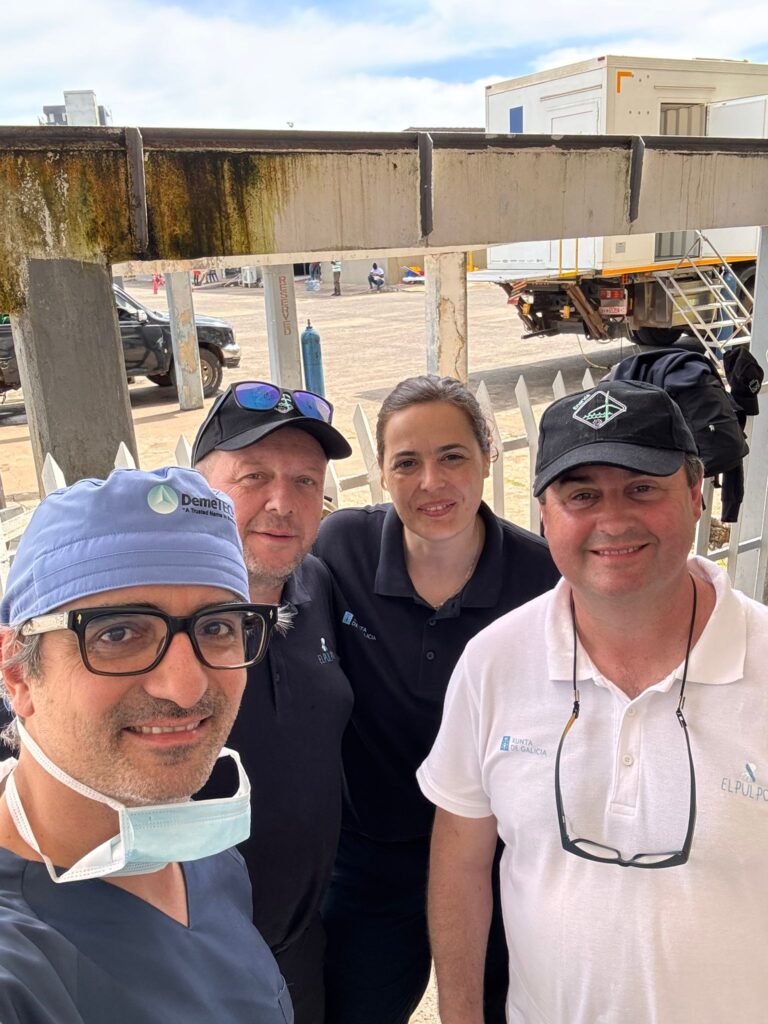
For his part, surgeon Husam Enaami expressed his gratitude to everyone who made the mission possible:
“Working alongside such a dedicated team and an outstanding leader is truly inspiring. With every mission, we grow stronger—each one better than the last. Proud to be part of this extraordinary team.”